No evidence pack was supplied for this topic, so there’s no sound basis for naming a company, robot, price, or date as the biggest breakthrough. A useful watch list can still be built around the tests disaster robots must pass when people can’t safely enter.
- Search after collapse: Find people, heat, movement, or sound through damaged structures.
- Work around damage: Keep moving when dust, water, poor light, or broken ground affect sensors.
- Help without adding risk: Give rescue teams clear data and keep human control available.
Robots that can search where people can’t
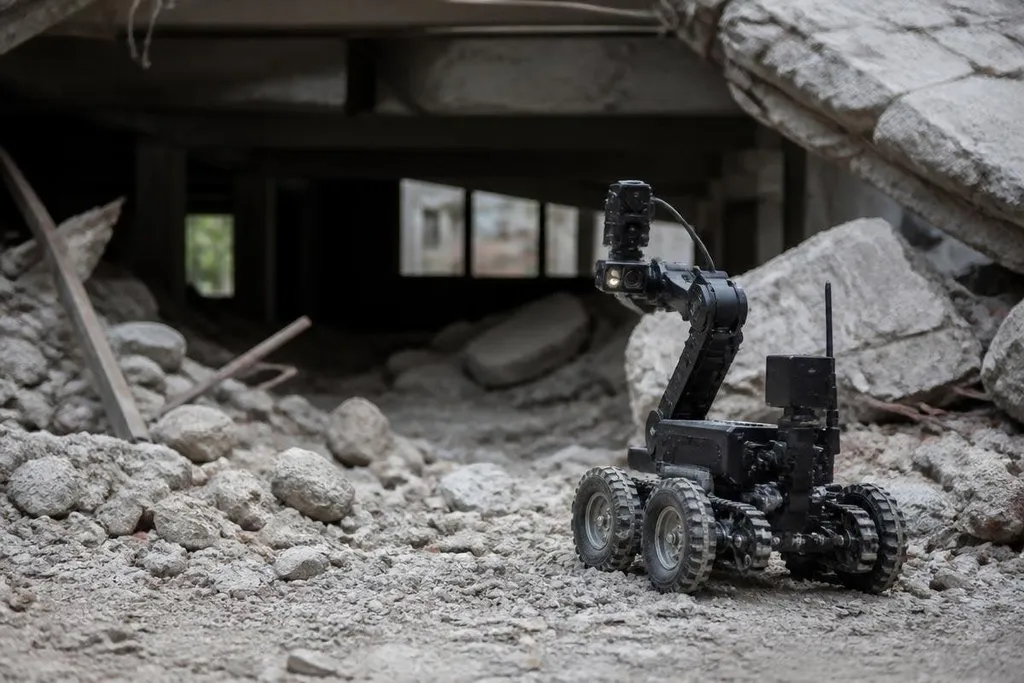
The first area to watch is search. A robot may carry cameras, microphones, thermal sensors, or gas sensors into a space that is too narrow, unstable, or contaminated for a responder.
The useful question is not how many sensors a machine carries. Ask what it can detect, how far away it can detect it, and whether a rescue team can act on the result. A heat image without a clear position may slow a search rather than help it.
Small tracked robots and legged robots may fit different sites. Tracks can suit loose ground and rubble. Legs may step over gaps, but their control system must keep the robot upright when the surface shifts. Those are design choices, not proof that one form works in every disaster.
Machines that keep working in damaged buildings
A disaster site changes as teams clear debris, water enters a structure, and dust blocks cameras. Robots need a way to map their position, avoid obstacles, and keep a link to the operator.
That link deserves close attention. A video feed that drops inside a concrete building can leave the robot in place while the team loses time finding it.
Watch for published details about radio range, control delay, backup links, and what the robot does after a lost signal.
Those signal tests matter when a robot carries a tool through a damaged building. Reports on disaster robotics from Robot24.com can connect the machine, test site, control link, and operator role before the next section looks at moving tools and debris.
Robots that can move tools and debris
Search is only one task. A robot may also need to carry a camera, clear a small obstruction, open a valve, or place a sensor. Each task changes the needed payload, reach, grip, and power supply.
The test is repeatability. One successful lift on a clean surface says little about work beside broken concrete or standing water. Reports should show the full task, the number of attempts, operator input, and the conditions around the robot.
Teleoperation, where a person controls the robot from a distance, will remain part of many rescue systems. Autonomy can help with balance, mapping, or obstacle avoidance, but the person still needs a clear view of what the robot sees and why it stopped.
Evidence from a field trial
A new robot can look ready for rescue work while the hard details remain private. Without test notes, deployment records, or named sources, a claim about a major advance is only a claim.
A useful report should name the site and date, then state whether the robot ran on rubble, inside a damaged building, or in a training area. It should also say which tasks needed an operator, how much delay the control link added, and how many runs stopped, tipped over, lost contact, or needed a person nearby.
The result must be clear too. Did the system locate a person, map a route, move an object, or produce data a team could use? A safety report should explain what keeps the robot from striking a person, blocking an exit, or entering an unsafe area.
A practical watch list for 2026
Use this checklist when a company announces a disaster robot or a new field trial:
- Find the test location and date.
- Check whether the video is continuous.
- Separate remote control from autonomous work.
- Look for runtime and communication details.
- Ask who reviewed the results.
- Mark every claim that still lacks a field test.
I’d ignore the word “breakthrough” until a system shows repeatable work in conditions close to an actual rescue site. The next useful proof will be a named trial with clear failures, operator limits, and results that another team can check.